
You look at the 2026 Toyota Tundra and quickly realize this upgrade is not about chasing the highest horsepower number at any cost—it is about giving you stronger, more usable power while protecting the long-term reliability that made you trust Toyota trucks in the first place. Instead of returning to a big V8, Toyota doubles down on its twin‑turbo V6 and i‑FORCE MAX hybrid system, but with smarter cooling, standard heavy‑duty towing hardware, and refinements aimed at durability under real‑world loads.
You get robust torque for towing, better range from the larger standard fuel tank, and improvements in comfort and tech that make daily driving easier, without changing the proven core engines that now have more real‑world data and improved reliability scores compared to the troubled early years of this generation. If you want a truck that works hard, feels modern, and still plays the long game, the 2026 Tundra is built to keep that balance.
2026 Toyota Tundra Upgrade Explained
- You get two main engines: a twin‑turbo 3.4‑liter V6 and the i‑FORCE MAX hybrid, both tuned for strong torque and proven performance instead of risky experimental hardware.
- Every 2026 Tundra now includes a larger 32.2‑gallon fuel tank and a factory tow hitch with 7‑/4‑pin connector, improving range and towing readiness out of the box.
- Reliability improves as Toyota refines the same powertrain family, with better cooling, updated components, and fewer reported issues than early 2022–2023 models.
Toyota Tundra Overview 2026
| Detail | 2026 Toyota Tundra Overview |
| Engine options | 3.4‑liter twin‑turbo V6 (gas) and i‑FORCE MAX hybrid V6, both with 10‑speed automatic. |
| Power & torque | Gas: up to 389 hp/479 lb‑ft; Hybrid: 437 hp/583 lb‑ft for serious towing and hauling. |
| Drivetrain | Rear‑wheel drive or 4WD with electronic transfer case, depending on trim. |
| Key 2026 upgrades | Standard 32.2‑gallon tank, standard tow hitch, rear vents on Double Cab, added comfort and TRD features. |
| Towing focus | Strong low‑end torque, improved cooling, Tow Tech features on many trims and packages. |
| Target buyer | You want a capable full‑size truck that mixes modern power, technology, and long‑term dependability. |
| Official Website | https://www.toyota.com/ |
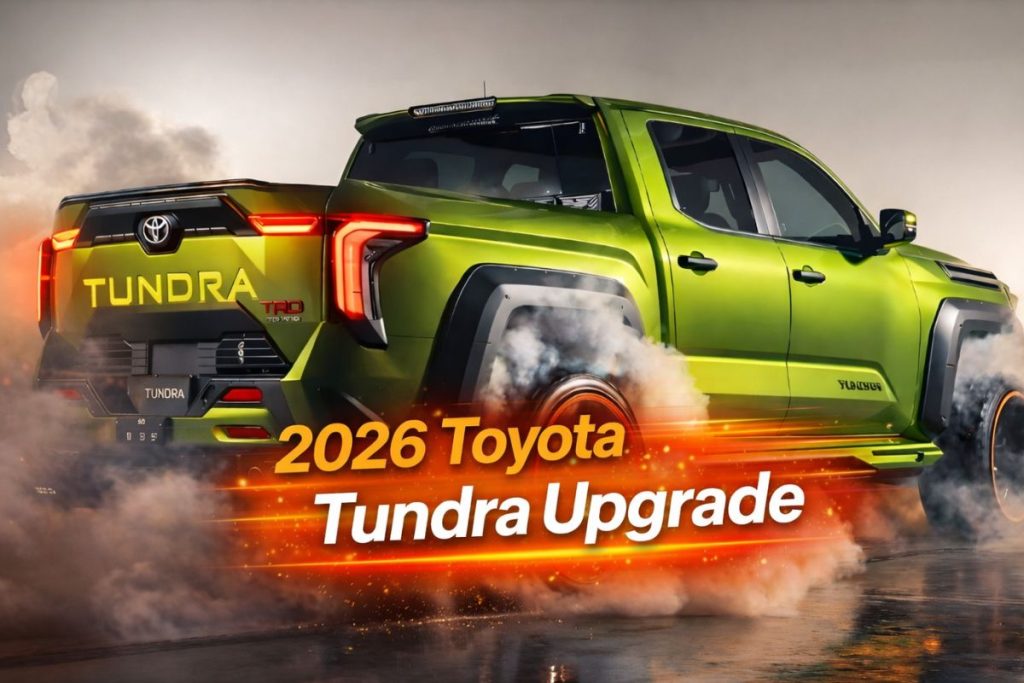
Toyota Tundra Exterior Design
You see a bold, squared‑off truck that sticks with the aggressive, modern look of the current Tundra but adds small details to keep it fresh for 2026. The wide grille, high hood, LED lighting, and muscular fenders give you serious road presence, while TRD Pro and off‑road packages add unique wheels, skid plates, and the new Wave Maker blue signature color.
On higher trims, you notice more premium touches like chrome or dark accents, power running boards on Platinum and 1794 with TRD Off‑Road, and available 20‑inch wheels on certain packages. Double Cab models benefit from subtle design tweaks around the rear cabin area, and the overall shape is tuned for both style and aerodynamic efficiency.
Toyota Tundra Interior and Comfort
When you step inside, you feel a cabin designed to work hard but still keep you comfortable on long drives. The 2026 Tundra keeps its wide, horizontal dash with big physical controls, but adds upgrades like new Shale‑colored premium leather on Capstone and standard leather seating on the Limited trim, giving you a more upscale feel without jumping to luxury badges.
Rear passengers benefit from new rear‑seat air vents on Double Cab models, improving comfort for your family or crew in hot or cold weather. Higher trims bring power‑adjustable front seats, heated and ventilated options, and in TRD Pro you can get Iso Dynamic seats that use clever shock‑absorber technology to reduce body movement on rough terrain and when towing.
Toyota Tundra Infotainment and Technology
You interact with a large central touchscreen (up to around 14 inches on higher trims) that supports modern features like wireless Apple CarPlay and Android Auto, so you can mirror your phone easily. The system is designed with clear menus and quick responses, and you still get physical knobs for volume and climate so you are not hunting through screens on bumpy roads.
Depending on trim, you enjoy a digital instrument cluster, head‑up display, premium JBL audio, and connected services like navigation with real‑time traffic and over‑the‑air updates. Trailer‑focused tech—such as trailer backup aids, camera views, and Tow Tech functions—helps you hook up and move large loads with more confidence.
Toyota Tundra Powertrain and Performance
You choose between two main powertrains, both built around a 3.4‑liter twin‑turbo V6.
- In SR models, the gas V6 makes about 358 hp and 406 lb‑ft of torque, giving you solid everyday power.
- In most higher trims, it rises to about 389 hp and 479 lb‑ft, enough to move the big truck quickly and tow serious weight.
- The i‑FORCE MAX hybrid pairs this V6 with an electric motor for around 437 hp and 583 lb‑ft of torque, delivering strong low‑end pull you feel immediately when towing or merging.
All versions use a 10‑speed automatic transmission that shifts smoothly and keeps the engine in its torque sweet spot. The hybrid’s electric motor fills in the gaps so you feel less turbo lag and more instant shove when you hit the throttle with a trailer behind you.
Toyota Tundra Stronger power without losing reliability
Instead of chasing new, untested engines, Toyota keeps the same core powertrains and focuses on refining them for 2026. Improvements to cooling systems, towing hardware, and software tuning are aimed at better durability under heavy use, especially for owners who tow often or drive in hot climates. You benefit from years of real‑world data on this V6 and hybrid system, plus growing reliability scores where Tundra’s earlier engine‑failure complaints have eased and Toyota regains high rankings in independent reliability studies.
Toyota Tundra Ride Quality and Handling
On the road, you notice the 2026 Tundra feels more planted and refined than older, leaf‑spring trucks. Toyota tunes the chassis and suspension for a smoother highway ride, especially on longer wheelbase models, while still keeping enough stiffness for hauling and off‑road work. Optional adaptive or upgraded off‑road suspensions on specific trims give you better body control when you are on rough trails or towing at speed.
Steering response has been improved for more natural feel and stability, particularly when you have a loaded bed or trailer attached. The truck stays more level in corners, and new Iso Dynamic seats on TRD Pro help absorb body movement so you feel less tired after hours on bad roads.
Toyota Tundra Safety and Driver Assistance
You get Toyota Safety Sense on every 2026 Tundra, which means a strong list of active safety and driver‑assist features is standard. This typically includes systems like pre‑collision warning with automatic emergency braking, lane‑keeping assistance, adaptive cruise control, and road sign recognition, all tuned to work well with a full‑size truck’s size and weight.
Higher trims and packages add blind‑spot monitoring, rear cross‑traffic alert, 360‑degree camera views, and trailer‑specific safety aids that help you see around your load and stay in control. Structurally, the Tundra uses a strong frame and advanced airbags, helping it earn solid crash‑test scores and giving you more peace of mind for family and work use.
Toyota Tundra Practicality and Utility
You buy a full‑size truck for real work, and the 2026 Tundra focuses on making that part easier. The new standard 32.2‑gallon fuel tank gives you noticeably better range, particularly important when towing or driving long distances where fuel stops are limited. A factory‑installed Class IV tow hitch and 7‑/4‑pin wiring now come standard, so you are ready to pull most utility trailers, boats, or campers without extra dealer add‑ons.
Bed options and cab choices let you match the truck to your life, whether you are carrying tools, dirt bikes, or family gear. Clever touches like available power running boards, multiple tiedown points, off‑road packages, and Tow Tech features improve everyday usability when you load, unload, or maneuver in tight spaces.
Toyota Tundra Pricing and Availability
For 2026, Toyota keeps pricing close to the 2025 levels, reflecting small updates rather than a full redesign. Expect starting prices in the mid‑$40,000 range in the U.S. for lower trims, with well‑equipped Limited, Platinum, 1794, TRD Pro, and Capstone models climbing into the upper $60,000s and beyond depending on options, hybrid power, and 4WD.
The 2026 Tundra is scheduled to reach dealers around the traditional fall truck‑buying season, giving you time to compare it against rivals from Ford, Ram, and Chevrolet. Hybrid and high‑trim variants may see slightly tighter supply or longer wait times, so if you want a specific configuration it is smart to talk to dealers early or place an order.
Final Verdict
If you want more power but refuse to gamble with reliability, the 2026 Toyota Tundra hits a smart middle ground. You get proven twin‑turbo V6 and hybrid powertrains with strong torque, a bigger standard fuel tank, standard towing hardware, and comfort upgrades that make every drive easier, all built on a platform Toyota continues to refine instead of reinvent.
The early growing pains of this generation pushed Toyota to strengthen components, improve cooling, and tighten quality control, which now shows up in better reliability scores and owner feedback. For you, that means a truck that finally combines modern performance, tech, and efficiency with the long‑term durability you expect from a Toyota. If you are shopping for a full‑size pickup in the next year, the 2026 Tundra deserves a serious test drive before you decide.
FAQ’s
1. Does the 2026 Tundra get more power than before?
You get the same headline power numbers—up to 389 hp on gas models and 437 hp on the i‑FORCE MAX hybrid—but with better torque delivery, cooling, and towing‑focused refinements that make the power feel stronger and more usable in real life.
2. Is the 2026 Tundra reliable with the twin‑turbo V6 and hybrid?
Yes, Toyota keeps the same engine family but improves hardware, software, and quality, and reliability scores have risen compared with the problematic 2022–2023 models, helping Toyota reclaim top spots in independent reliability rankings.
3. When can you buy the 2026 Toyota Tundra and how much will it cost?
You can expect 2026 Tundra models to arrive at U.S. dealers around fall, with starting prices roughly in the mid‑$40,000 range and higher trims and hybrids costing more based on features and configuration.

Hi, I’m Harikesh, a content writer at cgncollege.com. I write engaging and informative articles covering the latest news, India, and global updates. My goal is to keep readers informed with accurate and insightful stories from around the world.